Engagement V · Organisational sensing · Flagship

Organizational Orientation Dynamics

CURRENT Organizational Orientation Dynamics™ (OOD)

Organisations move before they decide. This is the only CURRENT engagement that takes a leadership team out of its own building for several days, into terrain where orientation cannot be described — only observed. It is a field study of a team, conducted by the team itself.

2 – 4 days · Outdoor, residential · One closed leadership team

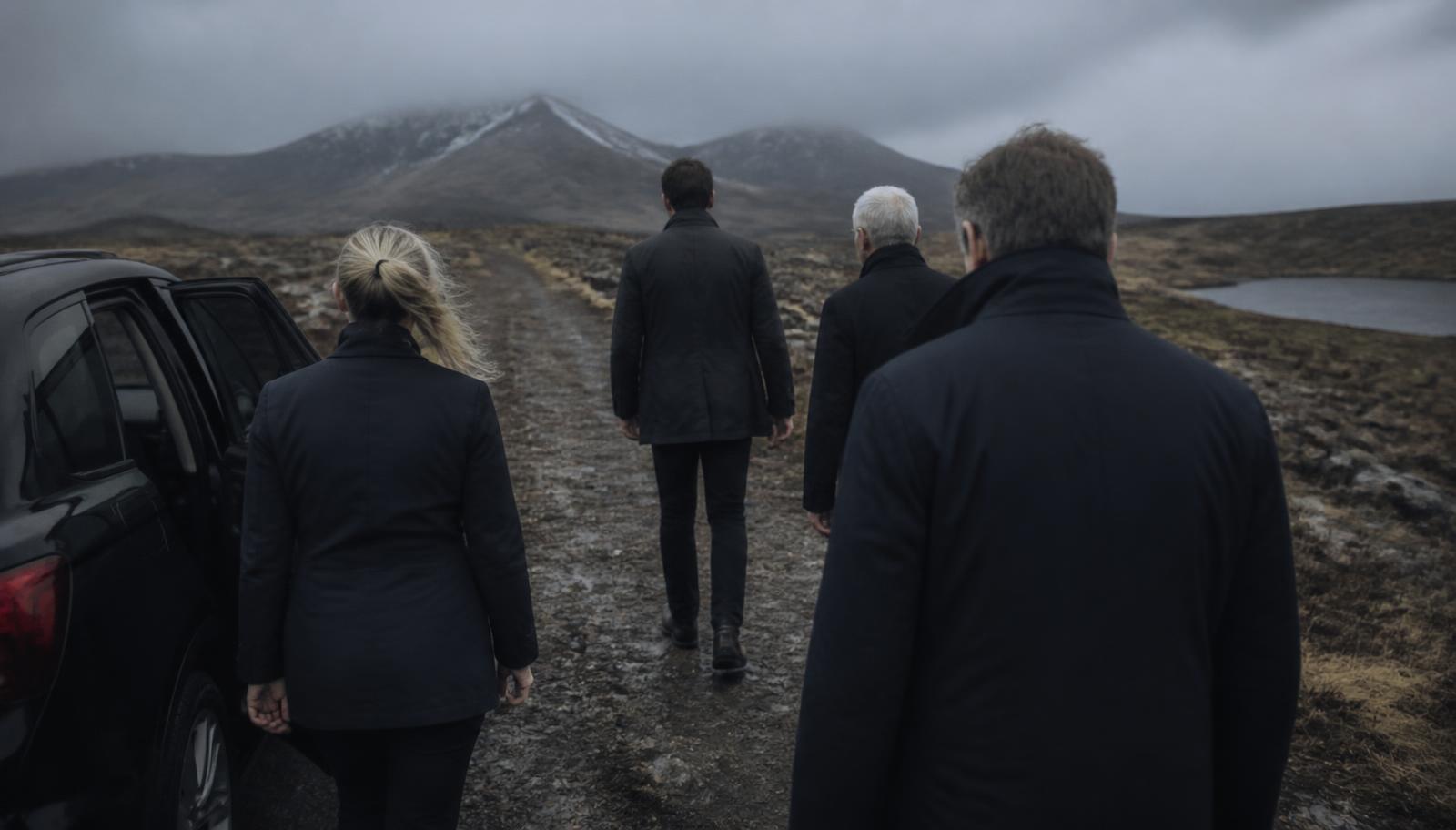
A leadership team walking away from a parked vehicle onto an open moorland path under low cloud.

Away from the usual room, different signals become visible.

What the field is for

Leadership becomes visible in motion.

CURRENT Organizational Orientation Dynamics™ (OOD) is not a conventional leadership retreat.

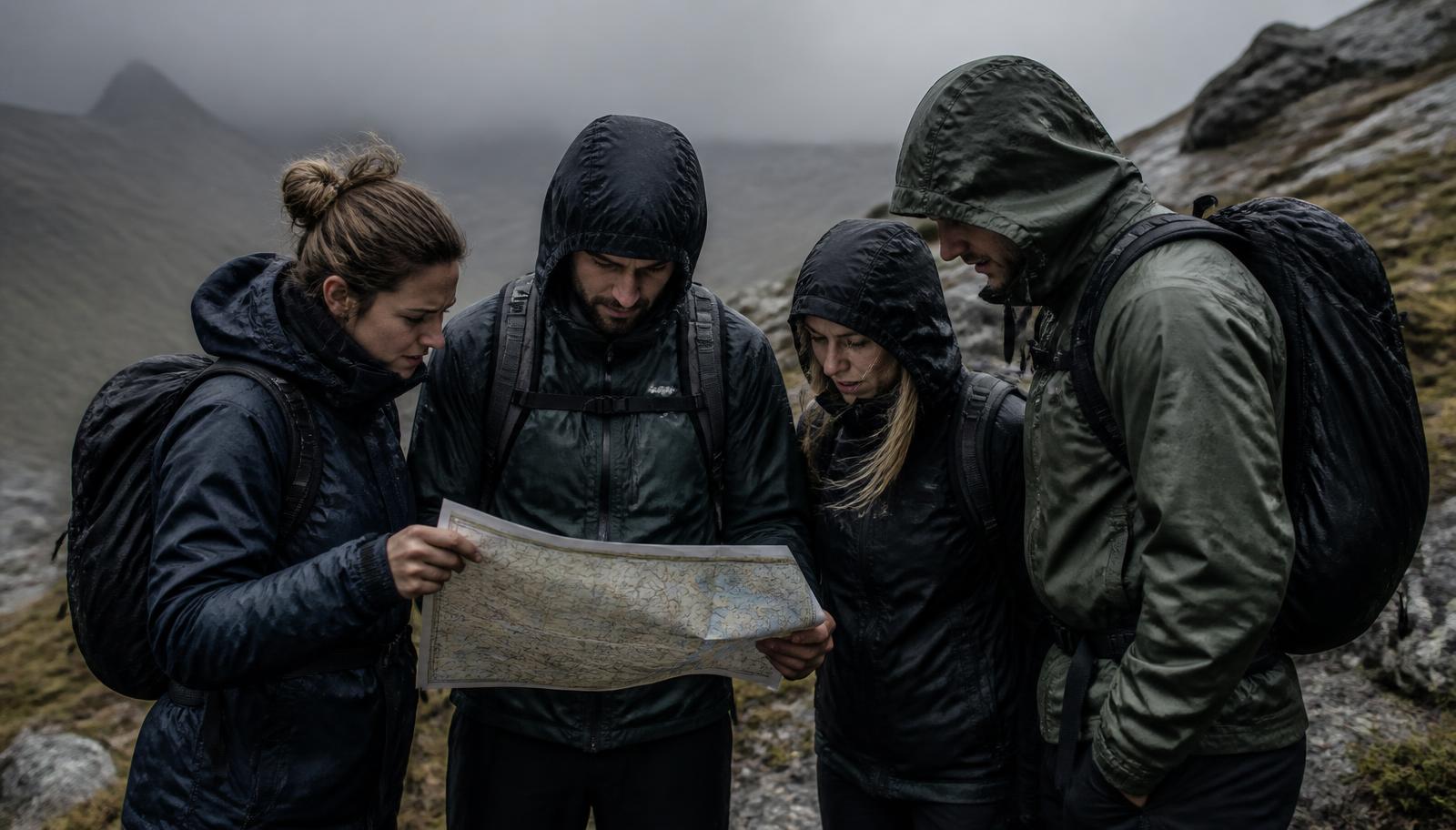
Part of the programme takes place outdoors and away from familiar organisational surroundings. Leaders work through demanding, time-bound situations in which information is incomplete, conditions shift and no one can rely entirely on role, hierarchy or prepared answers.

The purpose is not physical endurance. It is to make the team's actual dynamics visible: how people orient, communicate, assume authority, respond to ambiguity and recover when their first interpretation proves incomplete.

The experience creates pressure — but pressure with purpose. Each movement is followed by facilitated reflection, connecting what happened in the field to the team's strategic and organisational reality.

The setting changes. The patterns travel with you.

The rhythm of the days

A movement repeated, not a programme run once.

  1. 01Brief
  2. 02Enter
  3. 03Experience
  4. 04Pause
  5. 05Reflect
  6. 06Translate

The team moves between action and reflection, allowing patterns to be experienced, examined and connected to the organisation's real work.

The situation this addresses

The chart says one thing. The organisation turns towards someone else.

This programme is for a leadership team that suspects its formal structure has stopped describing how decisions actually travel. Work routes around certain people. Others carry authority no title granted them. Change initiatives are agreed in the room and quietly re-decided in corridors.

None of that is visible in a workshop, because a workshop lets everyone behave as their job description. It becomes visible when conditions are genuinely unresolved and the group has to move anyway.

What is being read

Three layers, observed rather than surveyed.

  • Orientation Points

    When uncertainty rises, people do not turn to the highest rank. They turn to whoever creates orientation — whoever stays calm, and is trusted before anyone can say why. These terms belong to Orientation Dynamics™, a CURRENT engagement; they are distinct from the Orientation perspectives — Personal, Relational and Organisational — set out at /saxskiold/orientation.

  • Resonance

    How someone listens, disagrees or meets a failure spreads quietly through a team and becomes the way things are done. Lines of trust form long before anyone names them.

  • The Current

    Repeated behaviour becomes shared expectation, and shared expectation becomes direction. Organisations do not become what they declare; they become what people orient towards.

The map, read three ways

Under uncertainty, attention gathers around a few people — not the highest rank, but whoever creates orientation.

In the vocabulary

Orientation Points

When uncertainty rises, people do not turn to the highest rank. They turn to whoever creates orientation — whoever stays calm, and is trusted before anyone can say why. These terms belong to Orientation Dynamics™, a CURRENT engagement; they are distinct from the Orientation perspectives — Personal, Relational and Organisational — set out at /saxskiold/orientation.

Select a term to read the map differently — the people do not move, only what you attend to.

Who should participate

A whole leadership team, in the field together.

Physical demands are moderate and adjusted to the group. No one is tested.

The programme reads a group, not individuals, so partial attendance changes what can be seen. Anyone who is a genuine orientation point in daily work belongs in the terrain; anyone attending as an observer does not.

  • The executive team, complete — not a delegation
  • The layer immediately below, where day-to-day orientation is actually given
  • Newly merged or newly formed leadership groups
  • Teams carrying an organisation through structural change

The intended movement

An Orientation Map of the organisation as it actually is.

Not a profile. Not a competency score.

The team leaves holding an — a living picture of how the organisation actually functions, and for many teams the first honest look at their own social architecture. The movement is from assumed structure to observed structure.

Orientation Dynamics™ is an engagement. The conceptual Orientation perspectives — Personal, Relational and Organisational — are a separate body of reading, not a version of this work.

  • Natural Orientation Points
  • Behavioural resonance
  • Hidden influencers
  • Emerging leaders
  • Trust networks
  • Cultural accelerators
  • Dependency patterns
  • Bottlenecks to collaboration

Format and duration

Days in the terrain, evenings in the reading.

Duration
Two days (a single reading) to four days (a full map with follow-through design)
Setting
Outdoor and residential, in Nordic terrain — deliberately away from the organisation's own rooms
Group
One leadership team, typically 6 – 18 people, closed
Rhythm
Movement and unresolved tasks by day; structured reading of what happened each evening
Facilitation
Kenneth Saxskiold-Noerup with a field lead responsible for logistics and safety

Timing matters more here than in the shorter formats: the map is most useful shortly before a structural decision, not after it.

What happens

Before, during and after the days in the field.

Before

  • ·A sponsor conversation on what the organisation is currently deciding, and what it keeps re-deciding.
  • ·A short confidential interview with each participant — no instruments, no questionnaires.
  • ·Practical brief: terrain, kit, safety, and what will and will not be recorded.

During

  • ·Sequences in the terrain where the plan stops fitting and the group must move anyway.
  • ·Observation of orientation as it happens: who is turned to, what spreads, where trust holds.
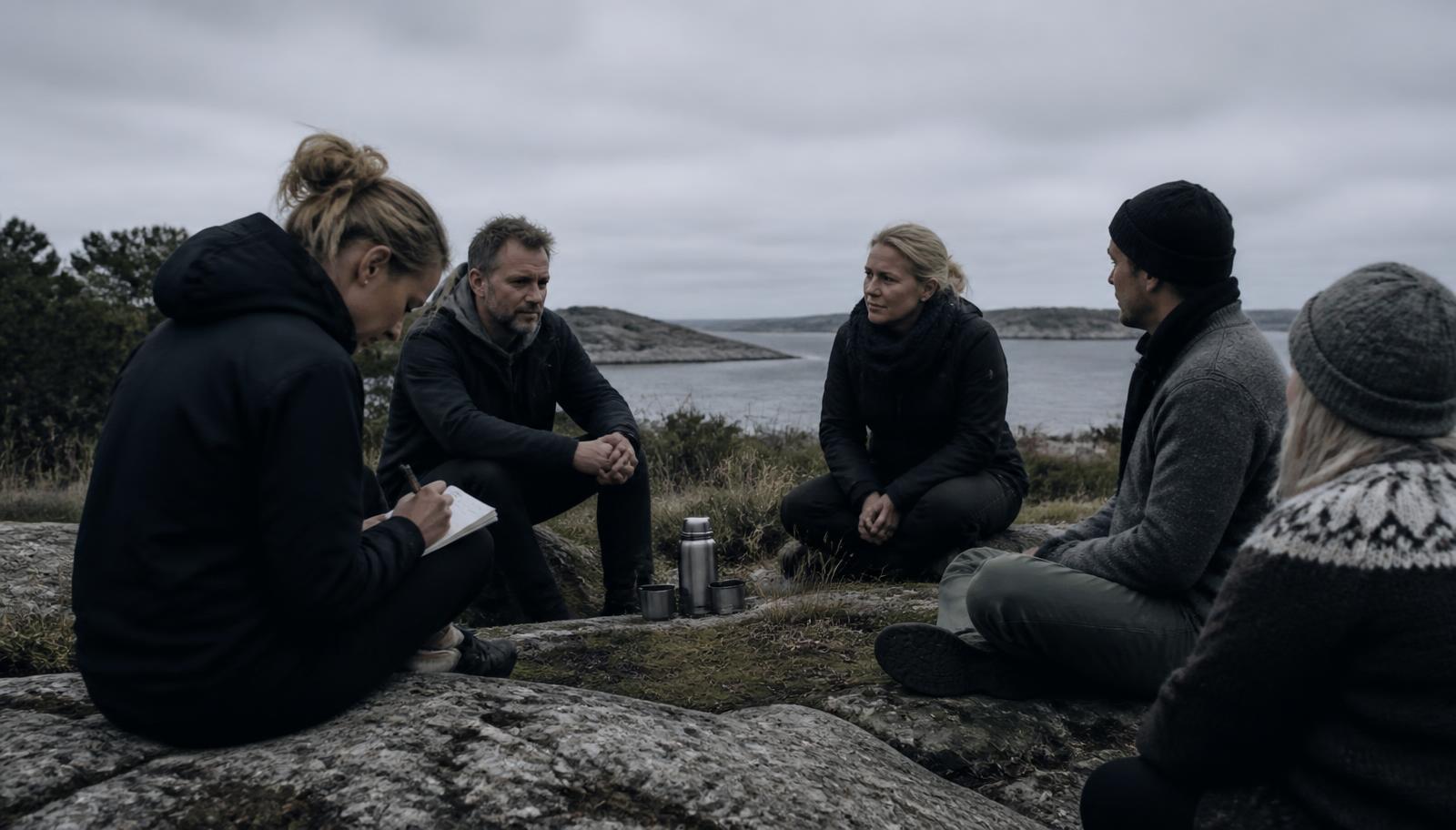
  • ·An evening reading each day, where the group interprets its own behaviour rather than receiving feedback.
  • ·The Orientation Map drawn collectively, and argued with, on the final day.

After

  • ·A written map and reading delivered to the team, not to HR or the parent company.
  • ·Two or three deliberate changes the team has chosen to make in how it orients.
  • ·A follow-up session six to twelve weeks later to test whether the map still holds.

The outdoor element

What the outdoor work involves

  • Facilitated leadership situations rather than competitive outdoor games
  • Changing conditions and incomplete information
  • Team-based observation, decision-making and coordination
  • Structured pauses and reflection
  • Translation into current organisational challenges

What it is not

  • A survival exercise
  • A test of strength, speed or physical fitness
  • Recreational teambuilding
  • Manufactured conflict or public embarrassment

Activities are adapted to the participants and setting. The challenge lies in orientation, judgement and collective response — not athletic performance.

What it is not

Not a team-building weekend, and not an assessment.

  • Not outdoor team-building: nothing is won, and no task exists for its own sake.
  • Not psychometric assessment — no personality instrument is used at any point.
  • Not a performance review; nothing observed is reported to anyone outside the team.
  • Not a survival course: the terrain is demanding in judgement, not in endurance.
  • Not the seminar taken outside — the teaching is minimal and the observation is everything.

The terrain does not create leadership. It reveals the leadership already there.

Confidentiality

The map belongs to the team that made it.

Field programmes surface material that cannot be put back. That makes the handling of it the first design decision, not an appendix.

  • Nothing observed in the terrain is attributed to a named individual in any written output.
  • The Orientation Map is delivered to the participating team, which decides what is shared upwards.
  • No photography or recording without the group's explicit agreement, revocable at any point.
  • Pre-programme interviews are confidential to the facilitator; themes are used, quotations are not.
  • Nothing from the programme is used in any search, assessment or advisory engagement elsewhere.

Questions

Questions we are most often asked.

How long does the programme last?

Two days is enough for a first reading of how the team orients under pressure. Three or four days allows the group to build a fuller Orientation Map and design follow-through. The right length depends on what the organisation is currently deciding.

What size of group works best?

One closed leadership team, typically six to eighteen people. The programme reads the group as a system, so partial attendance changes what can be seen. If the team is larger, we design a sequence rather than a single field event.

How is confidentiality handled?

The Orientation Map belongs to the team that made it. Nothing observed in the field is attributed to a named individual in any written output. Pre-programme interviews are confidential to the facilitator, and nothing from the programme is used in any other search, assessment or advisory engagement.

What should participants prepare in advance?

Very little. Each participant receives a practical brief covering terrain, kit, safety and what will and will not be recorded. A short confidential conversation with the facilitator happens beforehand, but there are no questionnaires, instruments or pre-reading to complete. A one-page preparation checklist is available to download below.

For participants

A one-page checklist covering what to arrange before travelling, what to bring into the field, and what to leave behind.

Download the checklist (PDF) ↓

Where this connects

Where the field reading leads.

CURRENT Executive Dialogue™

When the map has been drawn and a specific decision now has to be taken with it.

Open →

CURRENT Leadership Expedition™

The immersive field engagement, when one leadership team’s behaviour is what needs to be seen.

Open →

The Book

Stay · Sense · Shape as written — the argument the field makes visible.

Open →

Bring the team into a different field

OOD is designed around the leadership conditions your organisation is actually facing. Begin with a confidential conversation about the team, the situation and what needs to become visible.

Discuss an OOD engagement

How to begin

Bring your leadership team into the terrain.

  1. 01A confidential conversation with the sponsor about what the organisation is deciding, and when.
  2. 02A written outline: dates, terrain, duration, participants and what the team will leave holding.
  3. 03Confirmation, followed by individual interviews and the practical brief.

Before you write

What happens after I send an inquiry?

The note comes directly to Kenneth Saxskiold — it does not enter a queue or a marketing list. It is read, and you receive a personal reply proposing a short, obligation-free conversation of thirty to forty-five minutes to understand the situation before anything is proposed.

How quickly will I hear back?

Within one working day in most cases, and always within two. Inquiries sent over a weekend or a Danish public holiday are answered on the next working day.

Is my inquiry treated confidentially?

Yes. Inquiries are held in confidence, are never shared with third parties, and are not added to any mailing list. Where a situation is sensitive — a replacement, a board matter, an unannounced transition — the first conversation can be held without naming the organisation.

What should I include?

Only as much as is comfortable: the situation, roughly when it needs resolving, and who is involved in the decision. Nothing formal is required, and a fully written brief is not expected at this stage.

Am I committing to anything?

No. An inquiry is an opening conversation. Scope, approach and fees are only discussed once the situation is understood, and everything is confirmed in writing before any work begins.

Thirty minutes, no obligation. Choose a time that suits you.

← All engagements