
STAY. The Moment We Choose Not to Move On
Sometimes the most important discovery begins precisely where we would normally end the conversation.
Kenneth Saxskiold-Nørup · 29 October 2026 · 6 min
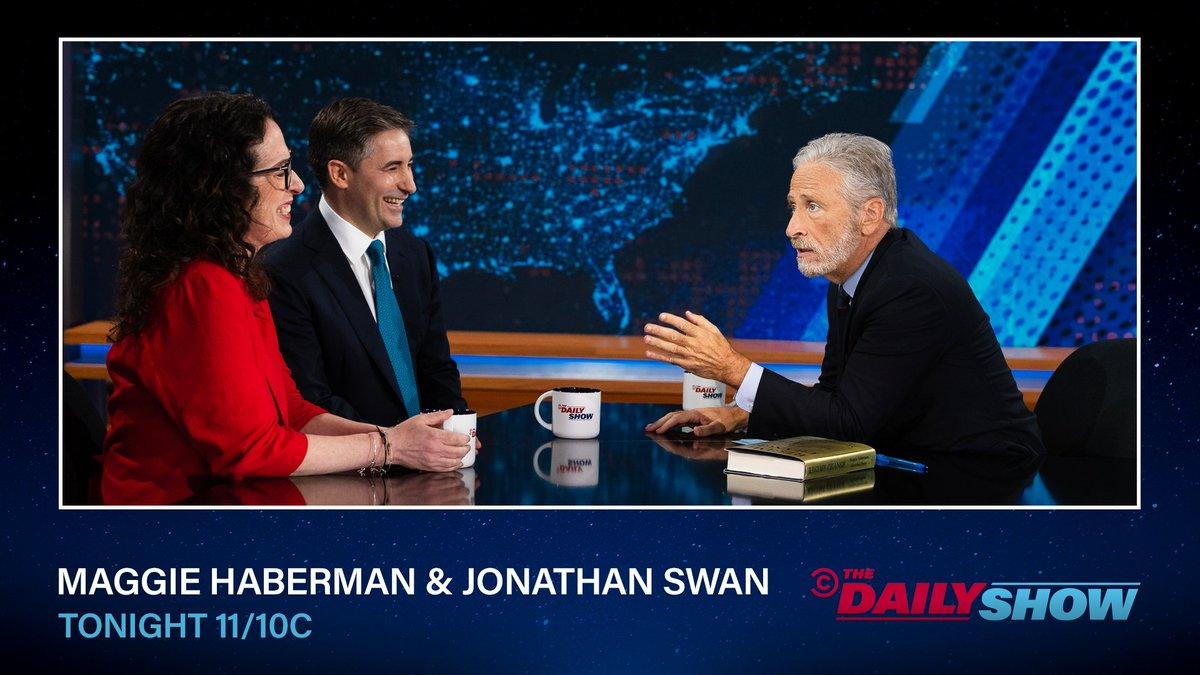
I was watching a conversation between Jon Stewart and two journalists, Maggie Haberman and Jonathan Swan, when something caught my attention.
Swan was recalling his now-famous 2020 interview with Donald Trump during the COVID-19 pandemic.
He had prepared extensively and had already spent considerable time discussing COVID. There were other questions waiting, other subjects to cover. The natural thing would have been to move on.
But then Trump produced a collection of charts, apparently intended to demonstrate how well the United States was handling the pandemic.
Swan could have acknowledged them and continued. Instead, he looked more closely.
Something did not fit.
Trump was pointing to deaths relative to recorded COVID cases. Swan was asking about deaths relative to the population. Two different measures, telling different stories.
Rather than dismiss the charts or enter a broader argument, Swan stayed with the discrepancy.
And what followed became one of the most revealing exchanges of the interview.
Not because Swan delivered a devastating speech or somehow won an argument. He simply refused to abandon a question that had not yet been answered.
Six years later, reflecting on that moment with Stewart and Haberman, the conversation turned towards a familiar tendency: the urge to keep moving through an interview because the next question is waiting.
As Stewart drew him out, Swan's answer was almost impatient in its simplicity:
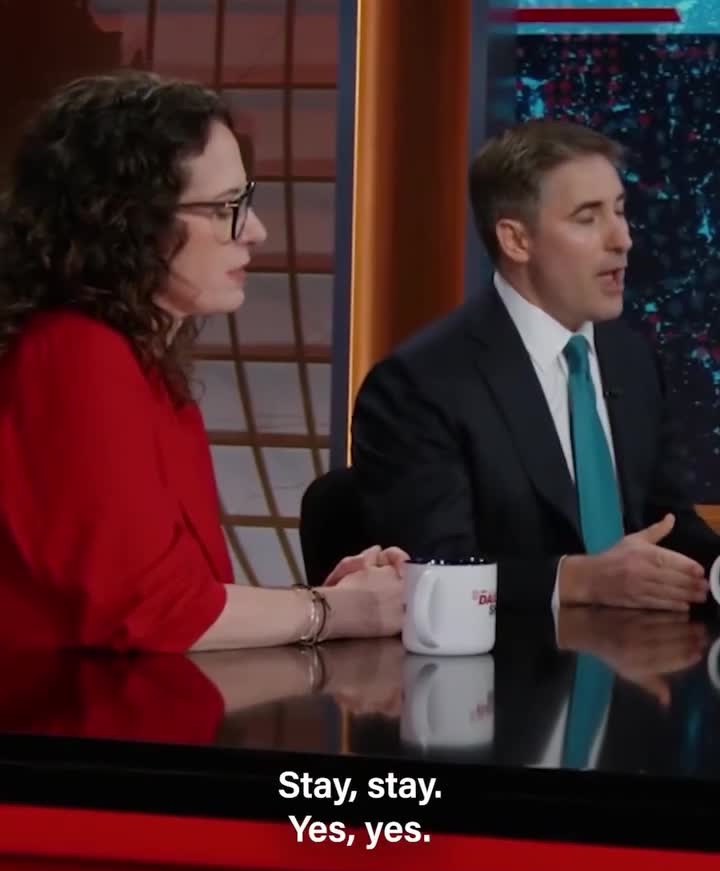
"Don't move on. Stay. Stay."
I replayed that moment.
Because it captured something I have encountered repeatedly throughout my professional life, and something I have been exploring in my work on leadership, judgement and the practice of remaining present.
We are remarkably good at moving on.
From one question to another. From disagreement to resolution. From uncertainty to action.
We call it progress. And sometimes it is.
But I wonder how often we mistake the act of moving forward for the achievement of understanding.
I have sat through countless executive interviews over the years, and the most revealing moments rarely arrive when expected.
A candidate describes a difficult transformation. The story is coherent, the achievements impressive, the lessons convincing. You could easily make a note and continue.
But perhaps there is a hesitation when responsibility is discussed. A subtle change of tone. An explanation that fits a little too neatly.
You have a choice.
Move on, satisfied that the question has been answered.
Or stay a little longer.
Not to catch someone out, or because every hesitation conceals some deeper truth. But because something suggests there may be more to understand.
Sometimes nothing more emerges. But occasionally the conversation changes entirely.
The polished account gives way to a more human explanation. A difficult decision becomes more complicated. Responsibility becomes less abstract. We begin to understand not merely what someone did, but how they experienced it, what they struggled with, and what they learned.
And often, that is where the real conversation begins.
What fascinates me about Swan's account is that his decision to stay was not a substitute for preparation. It was made possible by it.
He understood the subject well enough to recognise what the charts actually represented. He could leave his planned questions behind because he was sufficiently prepared to respond to what was happening.
And that distinction matters.
The purpose of preparation is not to protect the plan from reality. It is to make us capable of responding when reality becomes more interesting than the plan.
The same tension exists throughout organisational life.
Someone raises an uncomfortable concern in a leadership meeting. A plausible answer is offered, and everyone seems relieved to move forward. Yet the concern has not disappeared. It has merely stopped being discussed.
A colleague challenges an assumption during a strategy discussion. The challenge is acknowledged before the group returns to its prepared conclusions.
In a personal conversation, someone says something unexpected. We hear the words, but reach for reassurance or advice before understanding what they mean.
Sometimes we are not moving on because the matter is settled.
We are moving on because remaining would require something more of us.
More attention. More uncertainty. Perhaps more vulnerability.
This is where the idea of STAY becomes interesting to me.
Not as an instruction to prolong every conversation or insist upon an answer. There are times when continuing is unnecessary or unproductive, and good judgement includes knowing when to stop.
Nor is STAY about passivity or allowing someone else to control the conversation.
It is the deliberate willingness to remain engaged before deciding that we have understood what is happening.
To resist the premature comfort of a conclusion.
To notice what is emerging rather than merely search for confirmation of what we already believe.
And to recognise when our desire to move forward has become stronger than our understanding of the situation.
That takes us beyond communication techniques and into the territory of judgement.
We value decisiveness in leaders, and rightly so. Organisations need clarity, momentum and action.
But decisiveness without sufficient attention can become little more than speed.
And speed has a peculiar ability to disguise uncertainty rather than resolve it.
The more senior we become, the easier it can be to confuse our ability to end a conversation with our ability to understand it.
People stop questioning. Meetings finish on time. Decisions are recorded.
Yet sometimes the question that deserved another five minutes is precisely the one we have just left behind.
In my book CURRENT — A Practice of Living in Motion, I explore how life and leadership unfold through our participation in situations that are never entirely predictable or controllable. We are not standing outside events, directing them from a distance. We are part of what is happening, continually influencing and being influenced by the people and circumstances around us.
Seen from that perspective, STAY is not about standing still.
It is about remaining sufficiently present to participate intelligently in what is unfolding.
And there is a certain paradox in that.
Sometimes the most meaningful movement begins when we stop trying to move on.
I keep returning to that short exchange between Stewart and Swan.
It was a conversation about journalism, but I heard something much broader.
A reminder of how readily we confuse completing a conversation with understanding it. And how much might become visible if, every now and then, we allowed ourselves to remain just a little longer.
Perhaps the most important question at that moment is not what we should ask next.
Perhaps it is whether we have really finished with what is happening now.
Because sometimes, just when we are most inclined to move forward, something essential is about to emerge.
And all it asks of us is to stay.
Don't move on.
STAY.
Kenneth Saxskiold-Nørup
SAXSKIOLD | Executive Search & Leadership Advisory
Author of CURRENT — A Practice of Living in Motion
Source & acknowledgement
Inspired by Jon Stewart's conversation with Maggie Haberman and Jonathan Swan on The Daily Show, June 22, 2026 (Comedy Central / Paramount), in which Swan reflected on his August 2020 Axios interview with Donald Trump about the COVID-19 pandemic.
Original conversation: https://www.youtube.com/watch?v=xdmdGTrJ2nI
Facebook excerpt: https://www.facebook.com/reel/2656637114770246
Original video material remains the property of its respective rights holders. This article is an independent reflection on leadership and judgement.
Two images from The Daily Show are used in this article — a promotional image from the programme and one still from the referenced video excerpt — credited to Comedy Central / Paramount, for commentary and analysis.
Sources
The PDF opens in your browser’s print window — choose “Save as PDF”.
Kenneth Saxskiold-Nørup · SAXSKIOLD — Executive Search & Leadership Advisory
Read online: https://saxskiold.com/saxskiold/insights/stay-the-moment-we-choose-not-to-move-on
More insights
All insights →From the Field is a short monthly letter from CURRENT. Receive it.